


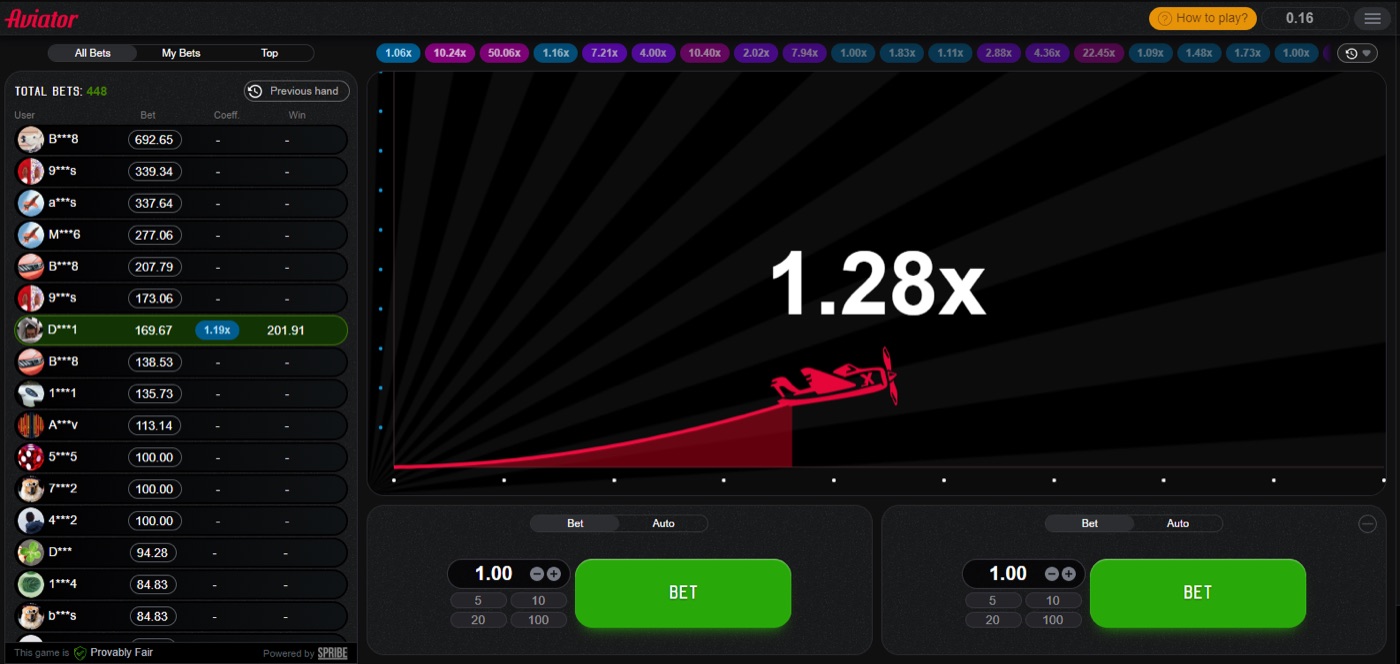
Aviator by Spribe uses short rounds and a rising multiplier. The round lasts about 8-30 seconds, then the plane can disappear at any point.
That timing changes how players make decisions. A player may choose a low multiplier within seconds, wait for a higher target, or use an automatic setting before the next round begins. The key issue is not finding a secret pattern. It is matching the stake and cash-out choice to a round that moves quickly.
Round Speed And Timing
Aviator rounds last about 8-30 seconds. The game runs through 60-90 rounds per hour.
A few seconds usually separate one round from the next. That gives players limited time to review the previous multiplier, choose a stake, and set a cash-out target.
A short round creates two separate decisions. The first happens before take-off. The second happens while the multiplier rises. The player must decide whether to cash out manually or let an automatic rule act.
- An 8-second round leaves little time for a manual reaction.
- A 30-second round gives more time to watch the multiplier rise.
- A few seconds between rounds can create pressure to place another bet quickly.
- The previous round does not change the next round’s odds.
Round speed does not make a high multiplier more likely. The crash point is fixed before take-off, so a longer-looking flight is not evidence that the next round will continue longer.
Manual cash-out also depends on communication between the device and the game server. A cash-out request must reach the server before the crash. A slow device or network latency can cause a time-out.
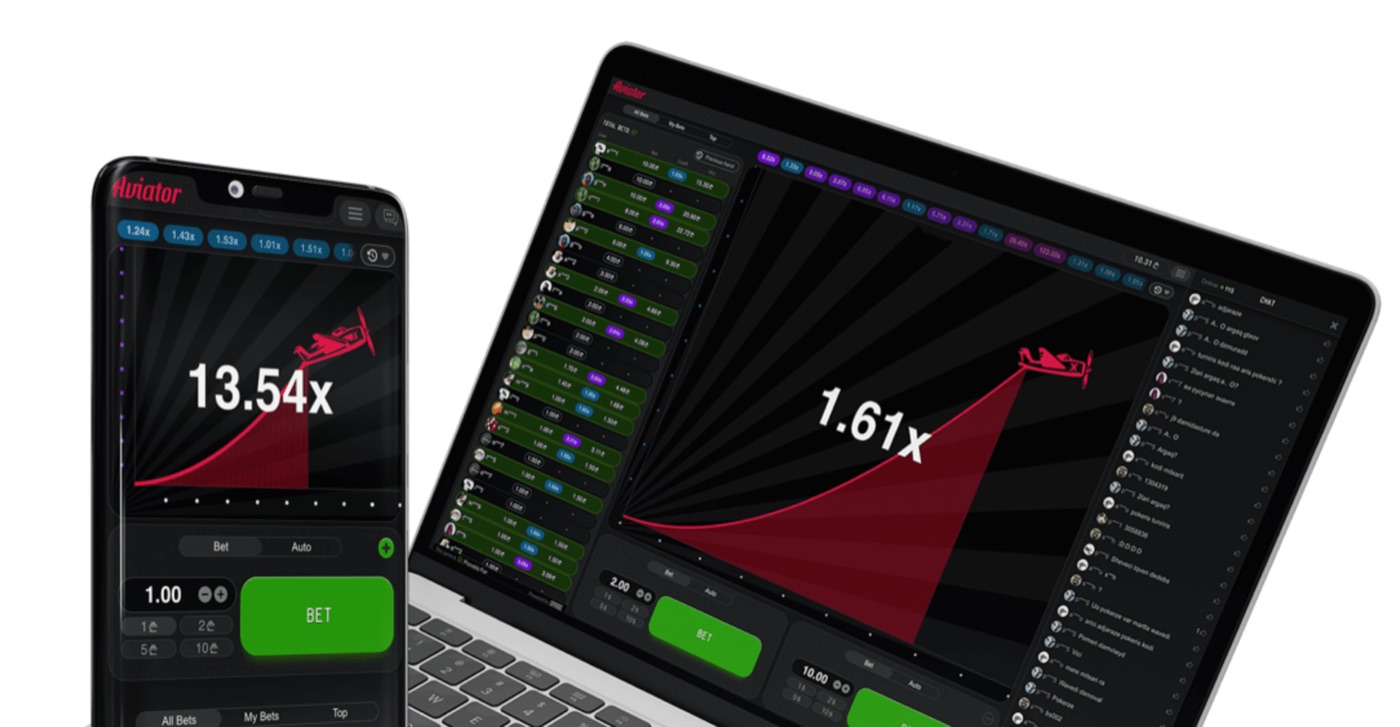
Different devices can show Aviator rounds at 13.54x and 1.61x while the game continues at the same fast pace.
Multiplier Choices In Seconds
Aviator reaches 1.5x in 64.7% of rounds. It reaches 2x in 48.5% of rounds.
The probability of reaching multiplier m is 0.97 divided by m. This calculation describes the chance of reaching a target, not a promise that a particular round will reach it.
| Target multiplier | Rounds reaching target | Decision meaning |
|---|---|---|
| 1.2x | 80.8% | Short target with a frequent reach rate |
| 1.5x | 64.7% | Common low target for quick cash-out |
| 2x | 48.5% | About half of rounds reach the target |
| 3x | 32.3% | Requires a longer flight |
| 5x | 19.4% | Less frequent target |
| 10x | 9.7% | Infrequent target |
For example, a 1.5x target means the player does not need to watch the whole round. The player can set the target before take-off and accept the result if the multiplier reaches it.
A 5x target creates a different decision. The player must accept that most rounds will end before that point. The target may produce a larger return when reached, but it also creates more losing rounds.
- Choose the stake before the round starts.
- Choose a multiplier that fits the intended holding time.
- Decide whether the cash-out will be manual or automatic.
- Accept that the target can fail before the multiplier reaches it.
About 3% of rounds crash instantly at 1.00x. That is roughly 1 in 33 rounds. A low target reduces the time spent waiting, but it does not remove the possibility of an instant crash.
The game has an RTP of 97% and a house edge of 3%. The expected value is -3% of the stake at every cash-out target. A different multiplier changes variance, not the house edge.
Decisions During A Round
Aviator has two bet panels in each round. Each panel can use a separate cash-out decision.
The game also shows previous multipliers at the top of the interface. Those results describe earlier rounds and do not alter the next crash point.
Two panels can separate two intentions. A player might use one panel for a lower target and the other for a higher target. This does not create a mathematical advantage. It changes how the player divides the stake and manages the timing of two bets.
For example, one bet can target 1.5x while the other remains active for a higher target. The first cash-out may happen early. The second bet can still lose if the multiplier crashes before its target.
Some players search for patterns in the round history. Independent rounds do not support that approach. A run of low or high multipliers does not change the probability for the next round.
When researching the crash game, a player may ask what is an aviator game before comparing multiplier and cash-out choices. The important gambling subjects remain the stake, target multiplier, and time available before the crash.
- The Bet tab supports a direct manual decision.
- The Auto tab supports preset actions.
- The live bets panel shows All Bets, My Bets, and Top.
- The round history displays previous multipliers.
- The in-game chat can show operator announcements and Rain Promo activity.
Manual play requires attention to the live multiplier. The player must select cash-out before the crash. Watching the number rise does not provide extra information about the fixed crash point.
Auto Cash-Out Settings
Aviator includes Auto Cash-Out at a preset multiplier. It also includes Auto Bet and Auto Play for 10-100 rounds.
Auto Play can include stop-on-win and stop-on-loss settings. These controls reduce the need to act during every short round.
Auto Cash-Out is a timing tool. A player enters a target such as 1.5x or 2x, and the game attempts to cash out automatically when that multiplier is reached. The setting does not guarantee a win because the round may crash first.
Auto Bet repeats the chosen stake across the selected number of rounds. A player can use it for a fixed sequence rather than placing each bet manually. The player should check the total exposure before starting the sequence.
- Set the cash-out multiplier before the round begins.
- Choose the number of Auto Play rounds, from 10 to 100.
- Use stop-on-win when the sequence should end after a win.
- Use stop-on-loss when the sequence should end after a loss.
- Review the stake for every repeated round.
Auto settings can help with a fast interface, but they do not predict the crash. They also do not change the 97% RTP or 3% house edge.
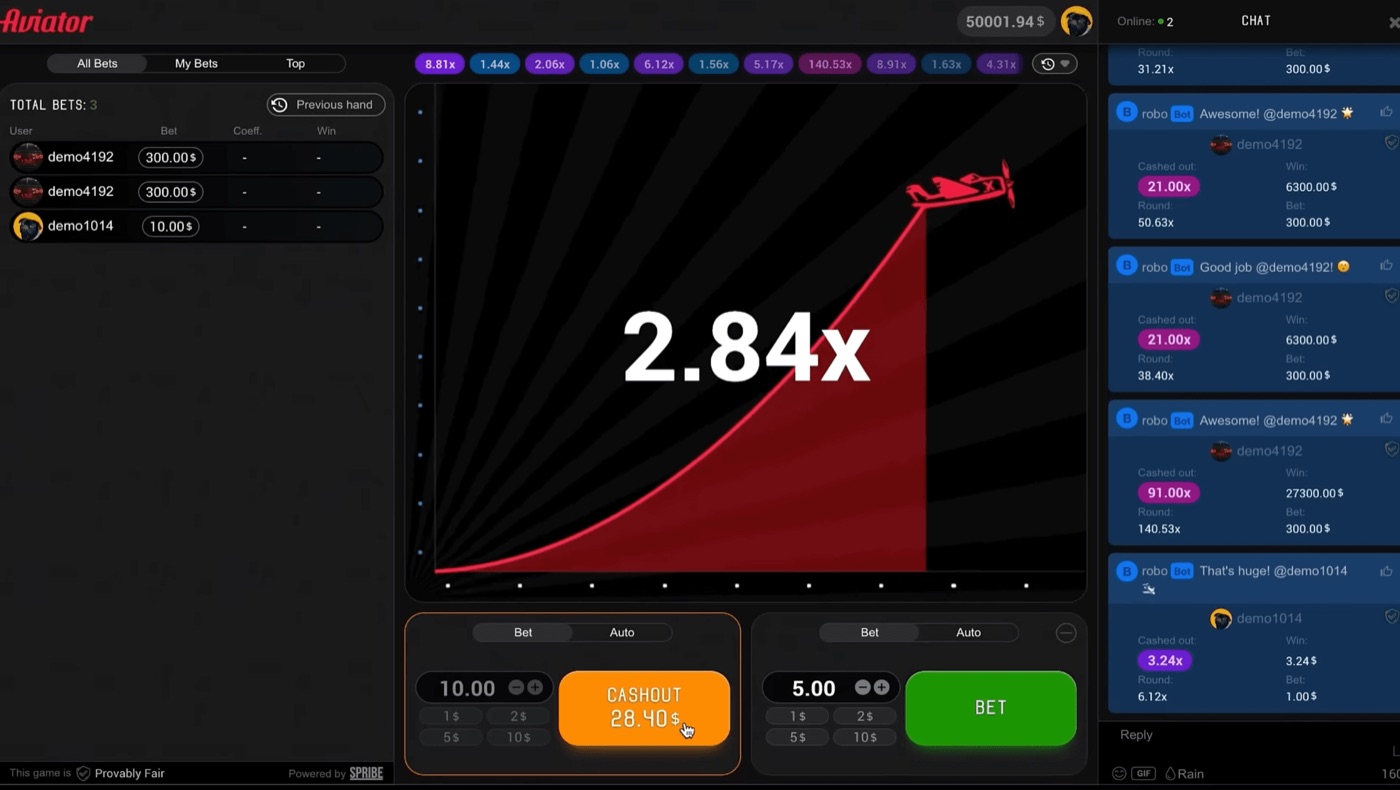
The Aviator interface combines live bets, chat, and a cash-out display at 28.40x.
Auto Play can continue while the player’s attention is elsewhere. That makes stop conditions important. Without a defined stop-on-win or stop-on-loss point, a short sequence can become a longer betting session.
Auto options work best when the player decides the stake and limits first. They should not be used as a reaction to a missed manual cash-out or a recent loss.
Fairness, Speed, And Latency
Spribe publishes a SHA-256 hash of the server seed before each round. The crash point is fixed before take-off.
Client seeds from players are combined with the server seed. After the round, the inputs can be checked with the verification tool inside the game.
This system explains why speed does not create a prediction method. Neither the operator nor Spribe can change the result after the round starts. The rising multiplier shows the progress of a result that was already fixed.
Latency affects the cash-out request, not the crash point. If the request reaches the server after the crash, the cash-out may not register. A time-out can therefore come from the connection or device rather than a changed multiplier.
- The server publishes the hash before the round.
- The player selects a stake and cash-out method.
- The fixed crash point determines when the round ends.
- The server reveals the inputs after the round.
- The player checks the result with the in-game verification tool.
Prediction apps and signal bots cannot know the committed crash point in advance. Version names such as “Predictor v4.0”, “v8”, and “v12” are marketing names, not Spribe products.
There is no standalone official Aviator app from Spribe. Aviator runs inside a licensed operator’s website or app, and the availability of its interface depends on that operator.
The game also has a demo mode through an operator demo or demo.spribe.io. The demo needs no registration and can help a player understand the round speed and controls without placing a stake.
Stake Size And Session Control
Aviator has a 3% house edge. Typical stakes range from about $0.10 to $100 per bet, depending on the operator.
A higher target increases variance because fewer rounds reach it. A lower target does not remove the negative expected value.
Guides commonly describe a stake of no more than 2% of the bankroll per round. That figure is a control method, not a way to overcome the house edge.
- Set a maximum stake before starting.
- Set a loss limit for the session.
- Set a win limit for the session.
- Keep the number of Auto Play rounds within that plan.
- Stop when the chosen limit is reached.
Martingale doubles the stake after each loss. After 10 losses, the next stake reaches 1,024 times the base stake. Fibonacci and D’Alembert systems also do not beat the 3% edge.
Aviator rounds are independent. “Best time to play”, graph analysis, patterns, and strategy chart PDFs do not change the odds. Off-peak play may support a smoother connection, but it does not improve the probability of a multiplier.
Responsible gambling means setting a loss limit and stopping when it is reached. A player should not increase the stake to recover a previous loss.
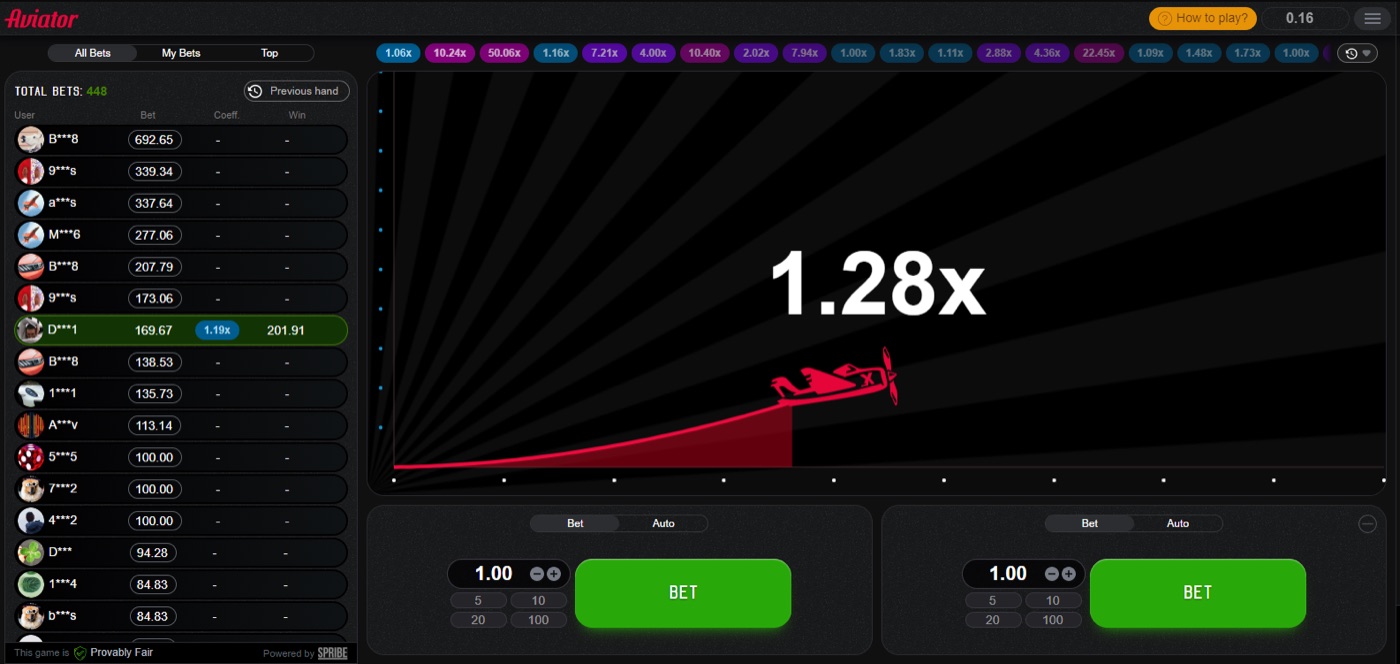
The plane in flight marks the short decision window before the Aviator round crashes.
The two-panel format can also increase total exposure. Two small bets may still represent a large combined stake when repeated over many 8-30 second rounds.
Aviator FAQ
Aviator uses rounds lasting about 8-30 seconds. The game provides manual and automatic cash-out options.
The crash point is fixed before take-off through the provably fair system. No multiplier pattern can predict the next result.
How fast are Aviator rounds?
Rounds last about 8-30 seconds, with 60-90 rounds per hour. A few seconds usually separate rounds, so players need to prepare the next stake and cash-out choice quickly.
Can auto cash-out predict a multiplier?
No. Auto Cash-Out only submits the cash-out action at a preset multiplier. The round may crash before that target, and the setting does not change the probability or house edge.
Why did my cash-out time out?
The cash-out request must reach the server before the crash. Latency or a slow device can delay the request. The time-out does not mean the fixed crash point changed.
Does a previous multiplier affect the next round?
No. Aviator rounds are independent. The round history shows earlier results, but a sequence of low or high multipliers does not alter the next round’s odds.
Can I play Aviator for free?
Aviator has a demo mode through an operator demo or demo.spribe.io. The demo needs no registration and lets a player examine the interface and round timing without placing a stake.
Is there an Aviator predictor app?
No predictor can know the crash point before the round. The result is committed by a SHA-256 hash before take-off, and third-party predictor apps do not provide a method for changing that probability.